Façades
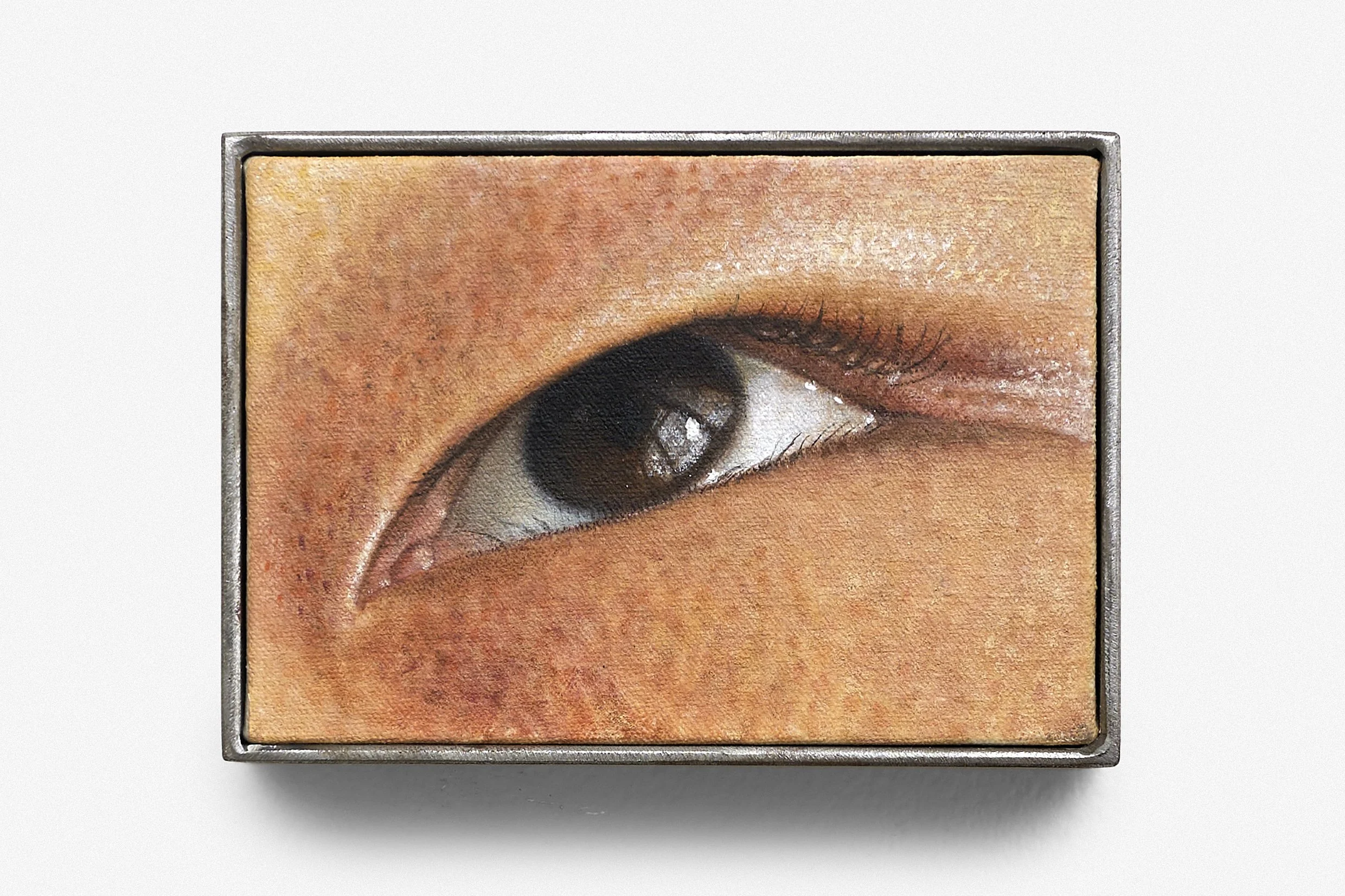
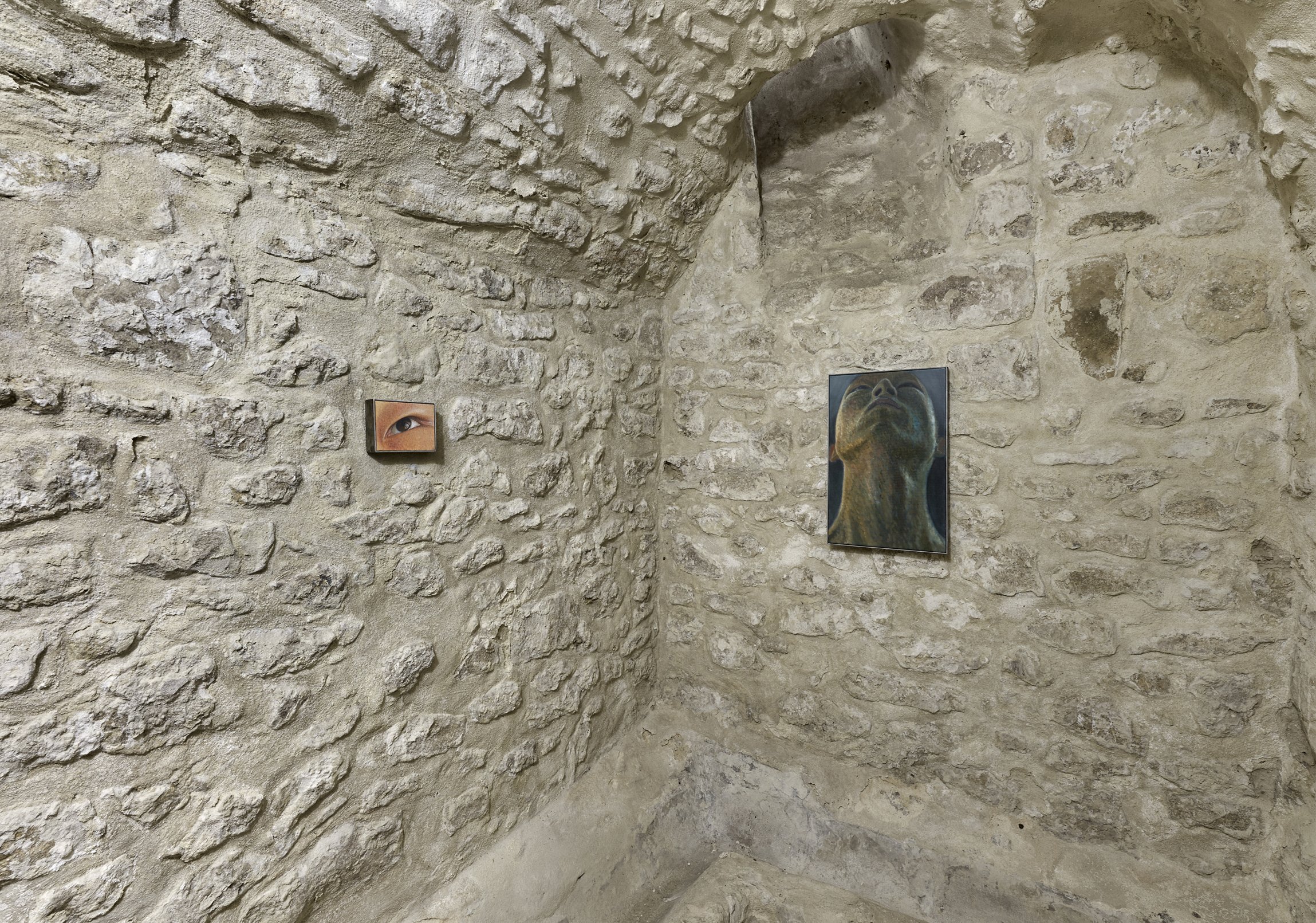
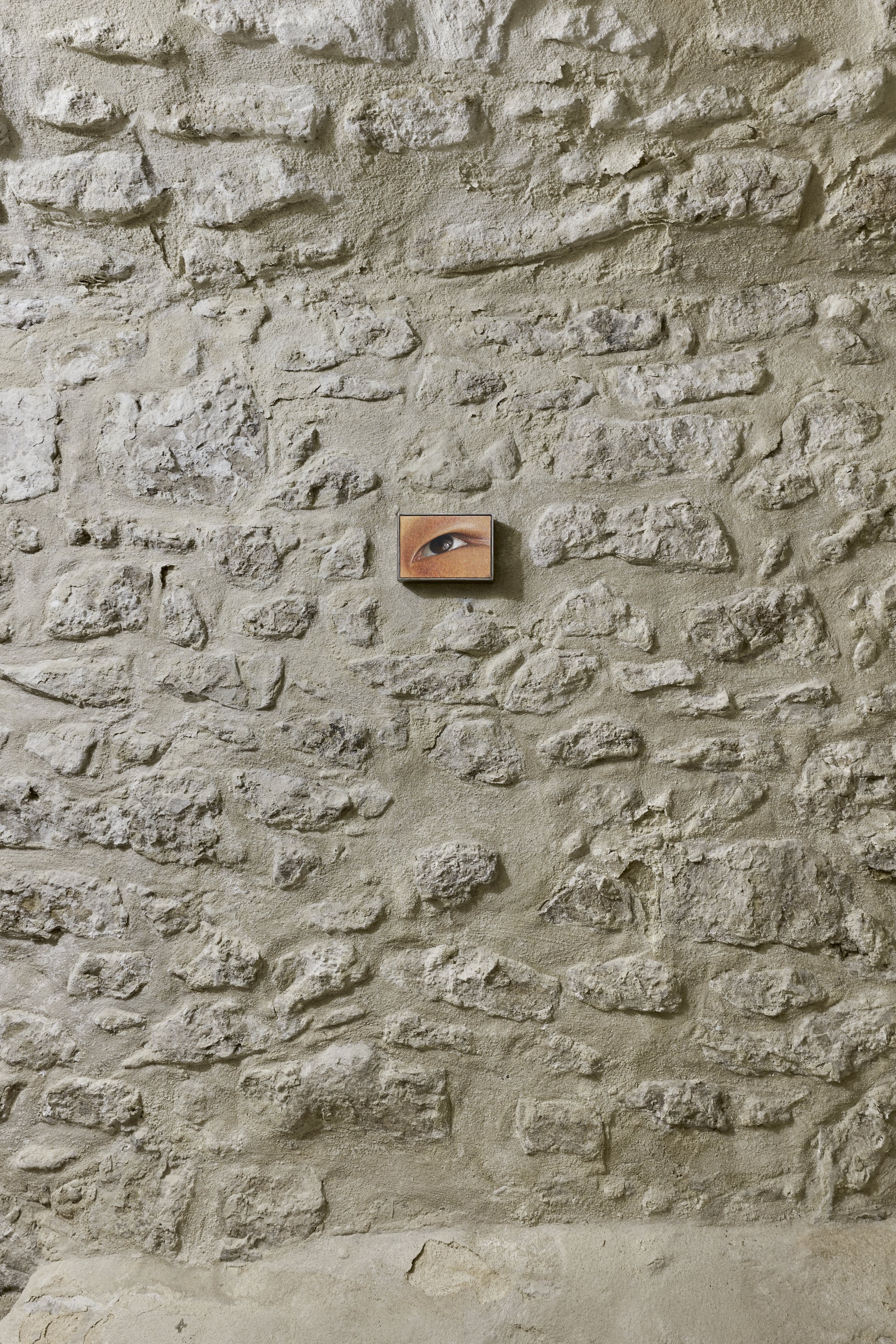
The Fold 009, 2026, Oil on canvas, 10.2 x 14 x 4 cm., 4 x 5 ½ x 1 ½ in. (SWK-2611)
About
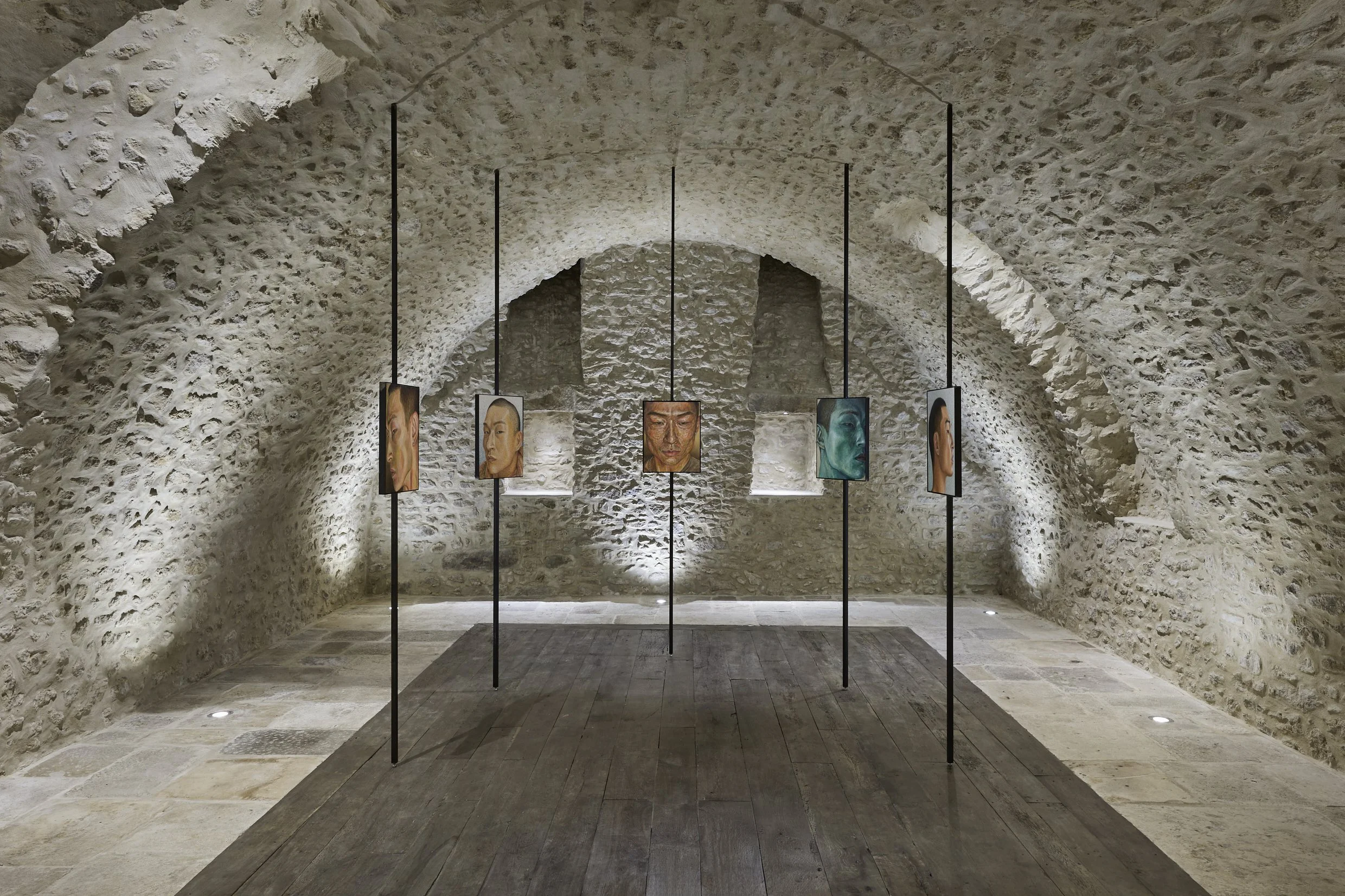
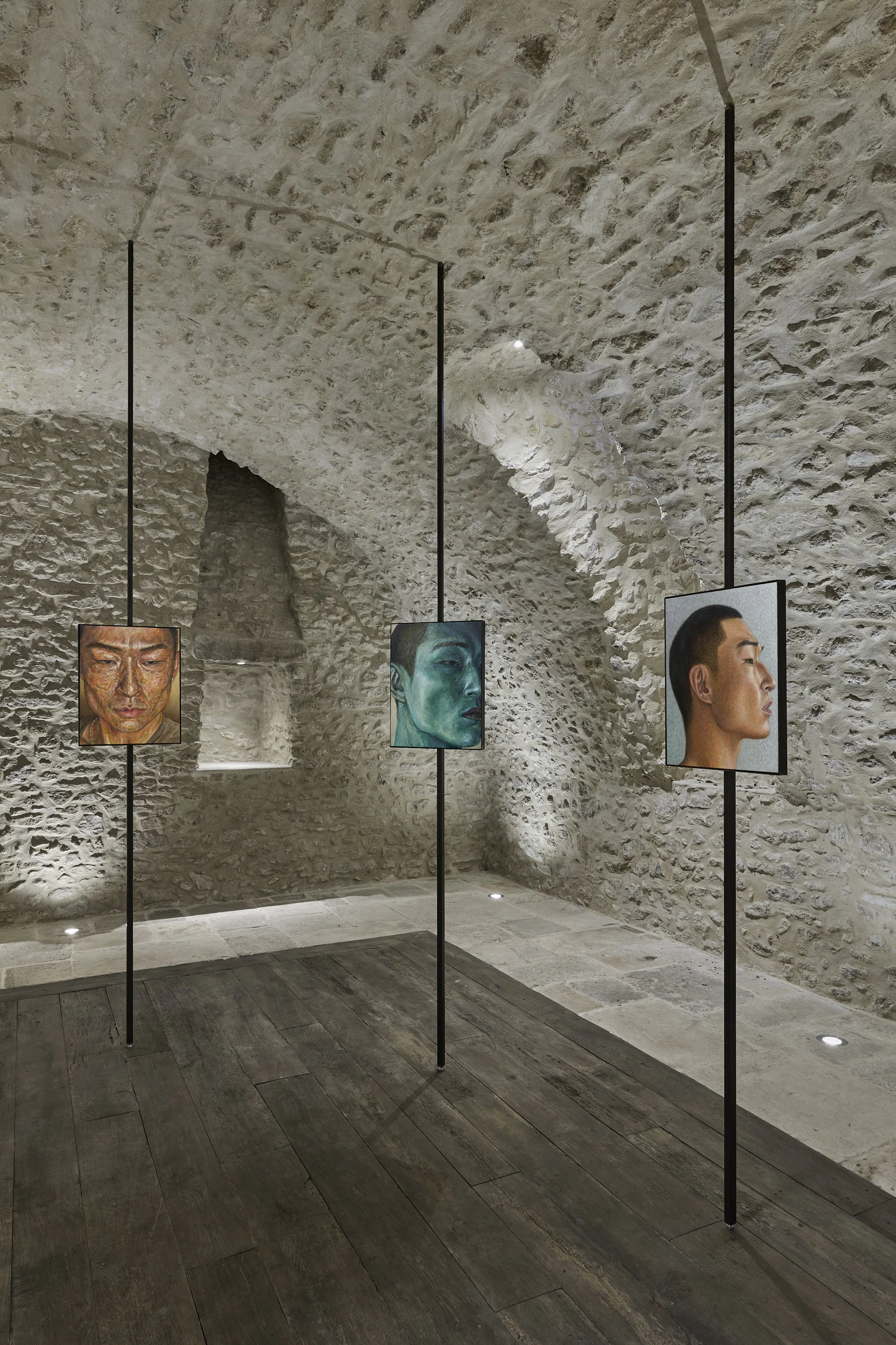
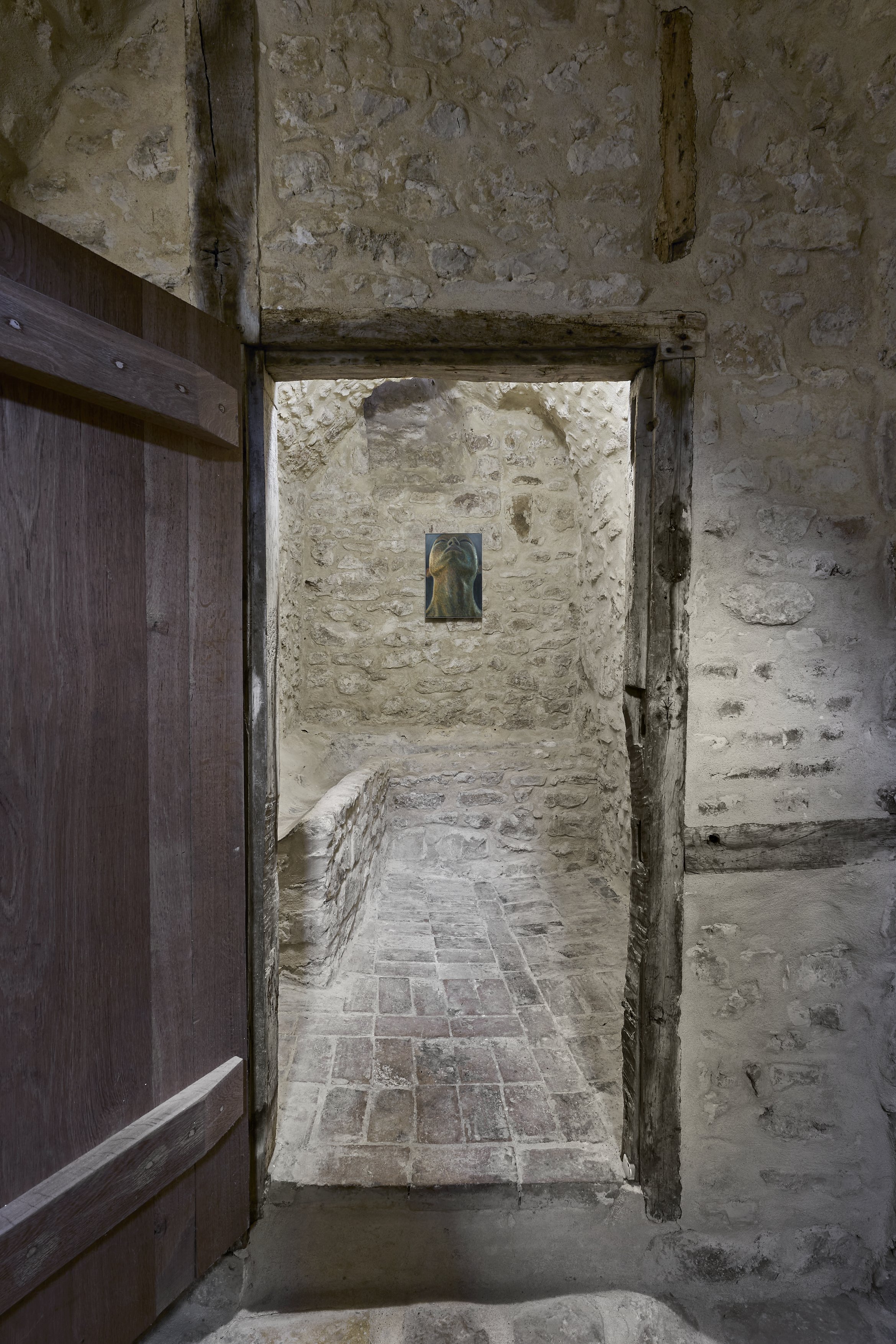
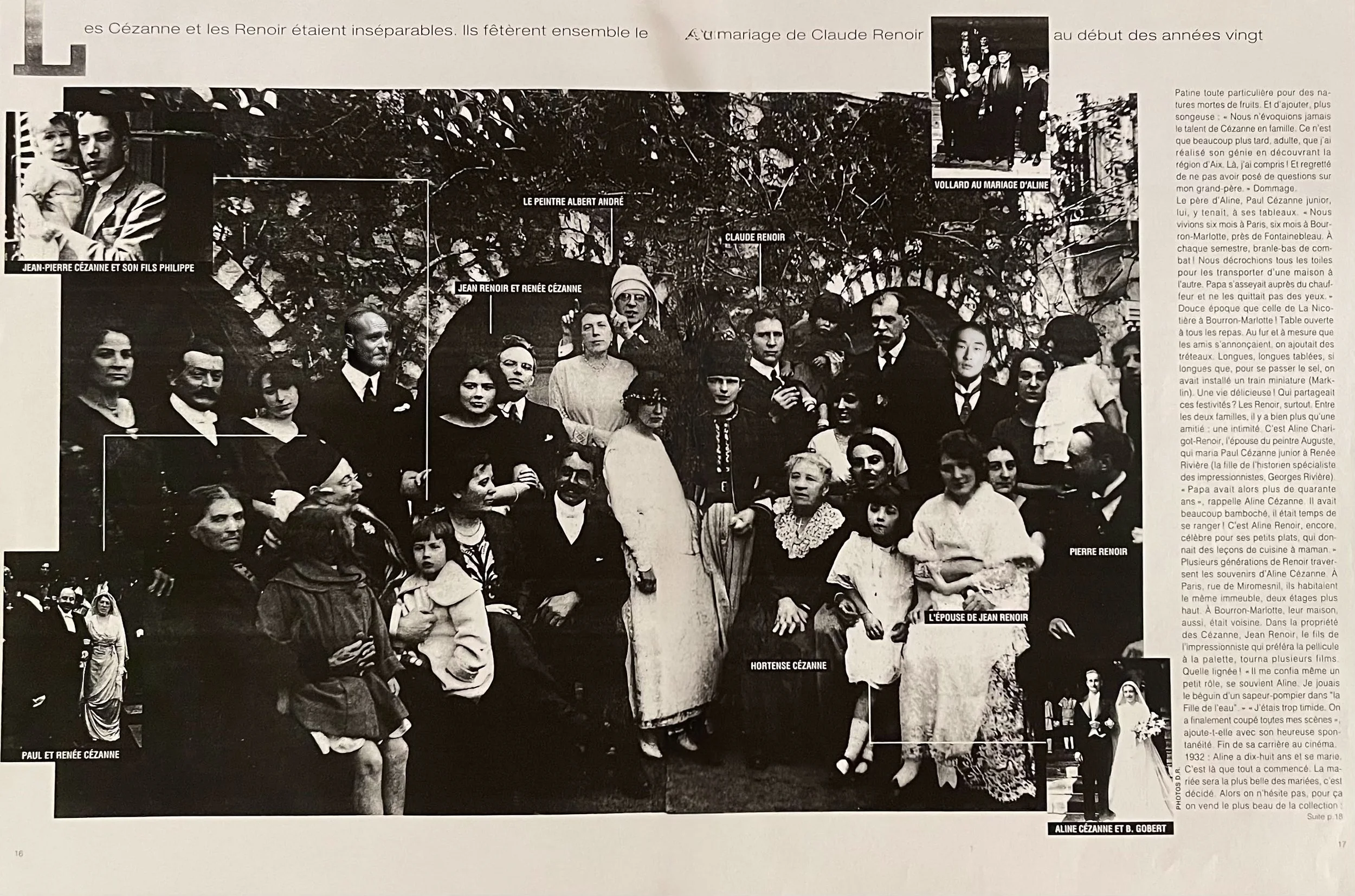
Sébastien Bertrand is pleased to present Façades, Sang Woo Kim’s (Seoul, 1994) first solo presentation in France, a site-specific exhibition at La Nicotière in Bourron-Marlotte. Set within the crypt-like interior of a house connected to Cézanne’s family, the exhibition unfolds in a village deeply associated with nineteenth-century European painting. Bourron-Marlotte became a place of residence and retreat for artists including Corot, Renoir, Sisley, Monet, Pissarro, Bazille and Cézanne. Against this historical backdrop, Façades places Kim’s self-portraits at the centre of a painting tradition in which East Asian artists have rarely occupied.
“When Sang Woo Kim was 16 years old, he painted a monumental self-portrait. On a frigid February morning in his East London studio, he shows me photographs of the painting. His face fills the billboard-like canvas, dwarfing the teenage Kim who stands next to it. “I was one of the only Asian guys at the school,” he tells me, “it almost felt like propaganda at the time.” Kim’s family had moved to the UK from Seoul for his father’s work when he was young. He didn’t look much like his classmates, something that he was acutely aware of. Rendering his face at such a scale felt like it meant something. Though he couldn’t articulate quite what at the time, it was enough to make him want to go to art school. He has lived a number of lives and followed various artistic threads since. Now, he’s back to painting self-portraits. “What was I trying to say back then?” he wonders, “Is it very different from what I’m trying to say now?”
Phin Jennings, writer for OCULA for PLUS Magazine
The five paintings represent a significant development in my ongoing practice of self-portraiture. Until now, I have consistently cropped my face, presenting fragments – eyes, ears, jaw, folds of skin – rather than a complete likeness. In Façades, for the first time in this ongoing body of work, my entire face is shown. The paintings are also among the largest I have made to date.
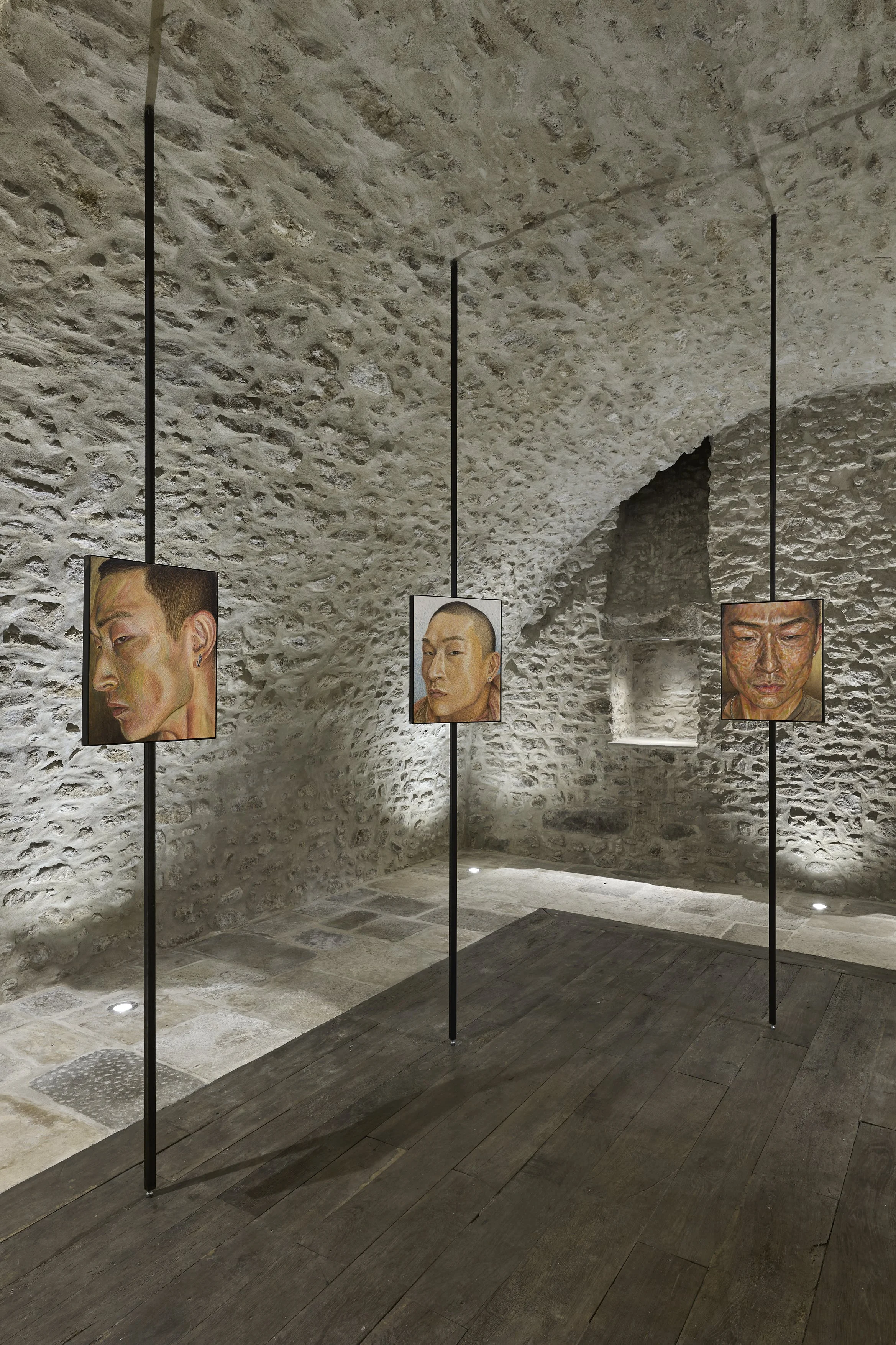
Moving systematically from one profile to the other, they form a sequence that recalls the clinical structure of modelling digitals or Polaroids: front, side, side again, as though my face were being documented objectively. Yet installed together in an oval formation, the five works acquire an unexpected iconographic and almost devotional quality. A format traditionally associated with the neutral assessment of a model becomes something more intimate and contemplative. This reversal is central to the exhibition.
The exhibition continues a process established in my first solo exhibition with Sébastien Bertrand, Glance, which explored looking, being looked at and the reclamation of my features through tightly cropped self-portraits. It was also the first time I ever presented my self-portraits and the beginning of this journey. Here, the borders of the canvas no longer provide me with the same protection. I think about this movement through the title of my ongoing series Closer: the paintings are not necessarily bringing the viewer physically closer; rather, I am allowing the viewer closer to me. As I become more comfortable with myself, my body and my autonomy, I am able to reveal more.
This increased visibility is complicated by the cultural history of the exhibition’s location. I grew up in the UK as a Korean person and learned painting through a predominantly Western art-historical framework. The techniques, histories and conventions I inherited were largely shaped by European traditions in which a body like mine was rarely positioned at the centre. I work within and through this painting tradition, asking what happens when the body occupying its visual language changes. I am interested in that contradiction rather than trying to resolve it.
My longstanding interest in the instability of the image began with experiences of racialisation and discrimination surrounding my face and eyes. Features that I was made to feel insecure about growing up later became the same features that were photographed, aestheticised and even fetishised through fashion and modelling. My body could move between being mocked, categorised, desired, commodified and celebrated depending on the context.
“This internalization of racialized attributions imposed by others, with whiteness as norm and belonging denied, also resonates with Frantz Fanon’s 1952 account of the racialized body. For Fanon, the body is not merely fixed by the paralyzing, petrifying gaze of the Other, as in Sartre, but “pathologized” to the point that it loses its sense of direction and orientation, producing an experience of fragmentation, disorientation, and non-belonging.”
Anna-Catharina Gebbers, curator of Hamburger Bahnhof for ArtAsiaPacific
“Sang’s work never slips into self-obsession; instead, it holds an honest sense of reckoning. His own image circulated widely for com-mercial purposes as a model, and by returning to it – repeatedly rendering it by his own hand as an artist – he both re-examines and reclaims his representation. “There are dualities in my work: British-Korean, artist-model,” he says.”
Sean Burns, editor and writer of FRIEZE magazine for Fantastic Man
The title Façades emerges from the contradiction at the heart of this gesture. A façade is an outward appearance, something visible and presented to the world, but it can also imply something constructed or concealed. Here, the title accompanies my most physically revealing body of work to date, yet the five paintings offer no single, settled version of me. Each painting employs a distinct painterly language. Rather than establishing a single recognisable style.
“Within painting, Jenny Saville’s fragmented, monumental bodies and Lucian Freud’s unflinching, corporeally dense portraits exemplify the kinds of inquiries that interest Kim. How can skin, folds, flesh, tonal variation, and shadow be rendered through color, brushwork, facture, and composition in ways that affect the viewer both emotionally and intellectually? How can painting make physical touch perceptible through sight? These are the questions Kim investigates when he documents every pore, crease, discoloration, sign of aging, and trace of bodily degeneration… What emerges is a painterly fascination with flesh and presence. Among the artists important to his development are Jenny Saville, Lucian Freud, Matthew Barney, and Robert Rauschenberg—a combination that may seem surprising at first. Yet all four engage intensively with the human body—its physical presence, materiality, vulnerability, and transformation—albeit through markedly different media and discourses.”
Anna-Catharina Gebbers, curator of Hamburger Bahnhof for ArtAsiaPacific
When I wrote about Glance, I was still showing only fragments of myself:
“We are different people every day, constantly changing and adapting – I feel this reflects in the way I paint. Different energy and emotions carried in different days of my life and being. That’s why all the works feel and are different, varying in style and scale. They are glimpses of myself, not revealing the whole – just yet… As I become more of myself – the artist – the more I intend to reveal of my face, body, autonomy. The consistency, however, still lives in my image. Conceptually speaking, there’s an irony – one can only recognise my work through the physical subject rather than the style of my painting.”
Façades feels like the next stage of this process: five paintings, five iterations of the same face. Each is among the most open renderings of myself I have made, while speaking through a distinct painterly language. In a place so closely associated with the Impressionists who once painted here, I wanted to test how a single image might shift through different ways of painting.
“He deliberately varies his painting technique, experimenting with mood, process, and daily disposition. In doing so, he raises questions about representation: how does visibility function? Who is permitted to depict whom, and how? What is the relationship between mediated images of a person and their identity?”
Anna-Catharina Gebbers, curator of Hamburger Bahnhof for ArtAsiaPacific
“Though Kim understands his practice as fundamentally conceptual rather than purely figurative, little of this enters Kim’s consciousness during the physical act of painting. “Painting becomes a form of meditation,” he tells me, “It is where I feel most present. There are no thoughts, just decisions and chance. I am entirely in the moment.” Often, he paints for 15 hours straight, paradoxically managing to abstract himself completely from the meaning embedded in an image – “in the focus of my eyes, my epicanthic folds as a locus of discrimination” – as it takes shape in front of him. He describes the process as meditative. This is visible in Kim’s work. Though he consciously uses multiple different techniques (“I have no framework with the way I paint,” he tells me), there is a rhythm in each image, his likeness rendered in countless rhythmic strokes that give many of the portraits a Neo-Impressionist flavour. A perpetual student of the history of painting as a physical act, the process has lost none of its allure or frustration for Kim. “When a painter does something I can’t fathom, that's what I believe is a really successful painting. How?! It pisses me off,” he laughs.”
Phin Jennings, writer for OCULA for PLUS Magazine
The paintings explore the gap between how I experience my own body and how it is interpreted by others. My face is the starting point, but I want to use the self-portrait to ask questions that extend beyond autobiography. What do we project onto a face? What do we recognise or categorise? What makes someone appear familiar, foreign, attractive, threatening, vulnerable or desirable?
“I’m reminded of Jean-Paul Sartre’s concept of “The Look,” where being seen by another turns you from a free subject into an object in their eyes. It’s a shift that can spark self-consciousness, shame, pride – all tangled emotions born from that gaze. Sang’s work touches on a double bind: a painting is meant to be looked at, yet its subject both invites the gaze and pushes it away.”
Sean Burns, editor and writer of FRIEZE magazine for Fantastic Man
I have often thought about my self-portraits as mirrors. The viewer is looking at me, but I want them to become conscious of themselves while looking. The reclamation of my image through painting is also an interrogation of the self more generally. I want the work to challenge and unsettle the viewer – almost like looking into a mirror and seeing themselves through the lens of another’s fractured gaze.
“Whatever artifice lies behind Kim’s formal processes is merely his desire to disrupt the expectations we might have of his editorialised and racialised image, and those images that he paints in response. These works stand as a theatre of self-interrogation or a hall of mirrors, whereby viewers are left to read themselves into Kim’s world, witnessing an artist searching for an image of himself that has yet to be seen.”
Eugene Yiu Nam Cheung, curator and head of programs at Rockbund Art Museum
A façade is often understood as something that must be removed to reveal what is “really” beneath. But I am not sure I believe there is a single true image beneath these different versions of ourselves. Identity changes according to time, context, geography, experience and who is looking at us. A face is always being interpreted, particularly in the age of social media, where images circulate endlessly and can become detached from the person they depict. We are asked to make ourselves visible, legible and consistent, yet the self is never fixed. For me, the façade is not simply a surface to be stripped away; it is also part of the person.
"Kim believes that he’ll be painting himself for life, and speaks with excitement and clarity about the various shapes that this might take. He imagines zooming out to paint human-scale full-body portraits as well as exploring sculpture and performance. To him, all of these ideas are part of the same project; one that has been in motion, in one form or another, since he was 16. Though Kim’s route into making the same kind of self-portraits that he did as a teen wasn’t straightforward, there’s a refreshing symmetry to where he has found himself today. His practice has come full circle and, in self-portraiture, he has found an authentic and refreshingly simple mode of self-representation. After a life spent having to explain himself, he tells me, “I can now just talk about my life, my experiences, in the purest and most honest way.”
Phin Jennings, writer for OCULA for PLUS Magazine
In Façades, greater visibility does not necessarily produce greater knowledge. My face is shown more completely than ever before in this ongoing series, yet its meaning remains unstable.
Perhaps there is no final portrait, and the façade is part of the person. Perhaps every portrait is, in some way, a façade. These works do not seek to resolve that uncertainty, but to remain within it: an ongoing process of revealing, withholding and coming to understand oneself.
“His self-portraits express both the desire to be seen and the dislocating experience of seeing yourself through others’ eyes. But they also narrate a deeply personal journey towards self-acceptance and – snippet by snippet – self‑love. In the future, will Kim be ready to zoom out and show more of himself? He smiles: “In 10 years, maybe I’ll do a head-to-toe portrait.”
Charlotte Janson, critic for The Guardian for The Financial Times
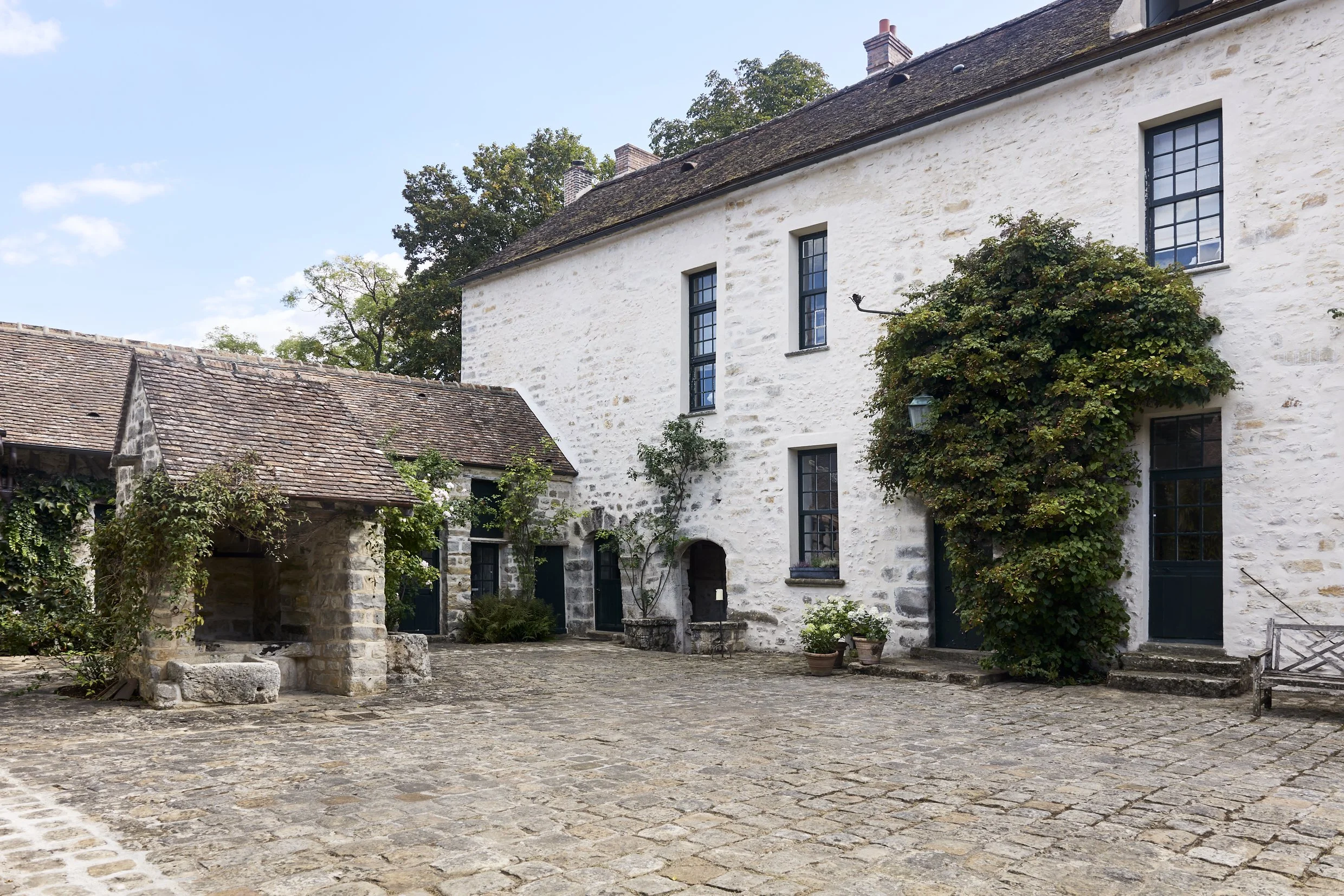
La Nicotière, Bourron-Marlotte
Installations Views